OSAKA CASTLE + 3rd MAIN TOWER
A great castle of Naniwa, spanning the ages.

OVERVIEW
Osaka Castle, located in Osaka City, Osaka Prefecture, is one of Japan’s most famous castles and a renowned Japanese castle associated with both the Toyotomi and Tokugawa families.
The castle and its surrounding castle town flourished throughout the Edo period.
Construction of the present Osaka Castle began in 1620, during the reign of the second shogun, Tokugawa Hidetada.
With its magnificent Main Tower crowned by golden shachihoko ornaments and its vast fortified grounds, it remains one of Japan’s most celebrated castles.
HISTORY
Osaka Castle, historically known as Ōsaka Castle, is a major early-modern Japanese castle built and reconstructed by both the Toyotomi and Tokugawa families. The original Toyotomi castle once stood on this site, but it was devastated during the Winter and Summer Campaigns of the Siege of Osaka. Later, in 1620, the Tokugawa shogunate began a major reconstruction project, completely covering the remains of the Toyotomi castle and creating a fortress on a scale several times greater than its predecessor. Much of what can be seen today, including the present Main Tower foundation, enormous stone walls, double moats, and numerous turrets, was created during this Tokugawa reconstruction.
The vast fortified grounds surrounded by inner and outer moats are remarkably impressive, reflecting the castle’s role as a powerful symbol intended to intimidate the western daimyo and its function as a major center for governing western Japan.
Two main castle towers were constructed during the Tokugawa period. The first Tokugawa-era Main Tower was an independent, layered-tower-style structure with five stories above ground and one basement level. It is traditionally said to have been relocated from the Genna-era Main Tower of Edo Castle and was completed in 1626 under the orders of the second shogun, Tokugawa Hidetada. Unlike the original Main Tower built by Toyotomi Hideyoshi, it featured a refined exterior dominated by white plaster walls. Just 39 years later, in 1665, it was destroyed by lightning and was never rebuilt during the remainder of the Edo period.
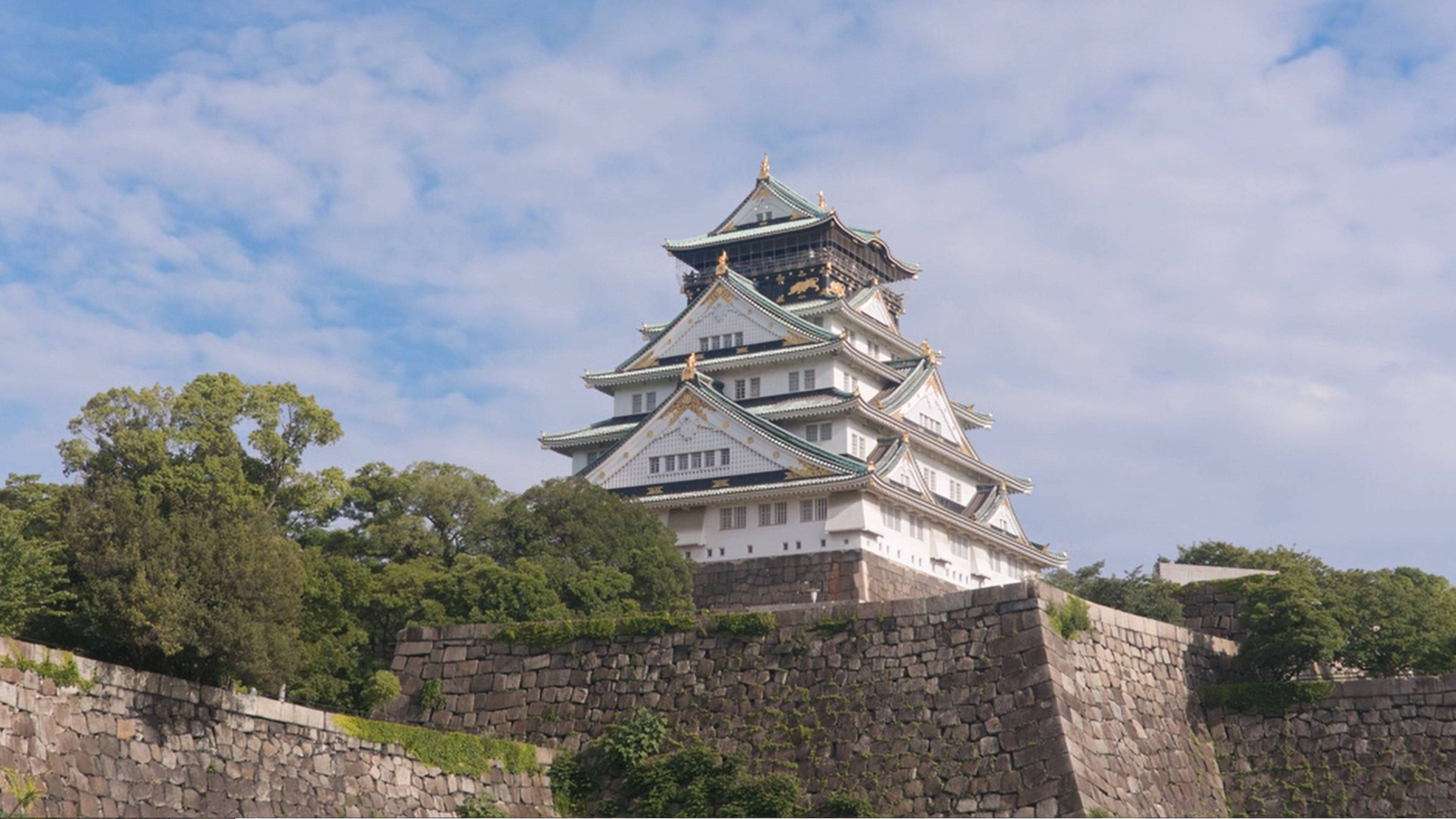
Then, in 1931, the present reconstructed Main Tower was completed as Japan’s first reinforced-concrete reconstructed castle tower, funded by enormous donations from the citizens of Osaka, with a total project cost of approximately 1.5 million yen.
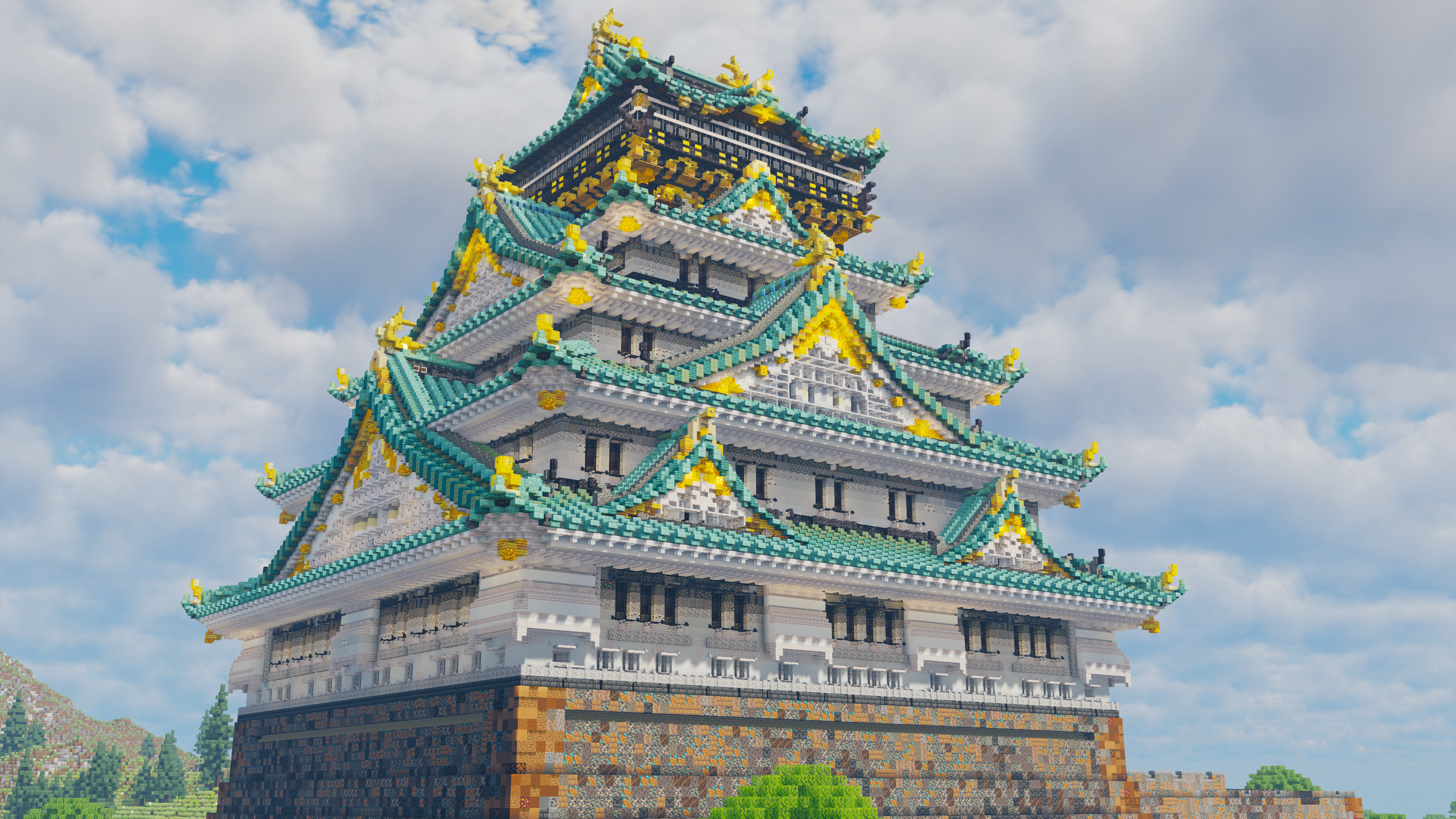
Its design adopted the appearance of a five-tiered, watchtower-style tower with eight internal floors, based on the Main Tower depicted in illustrations associated with the Siege of Osaka. The exterior was primarily modeled after the white plaster walls and bronze roof tiles of the Tokugawa period, while the uppermost level incorporated black lacquer, gilded decorations, and motifs such as crouching tigers and golden cranes reminiscent of the Toyotomi era. This created a distinctive design blending elements from different periods of the castle’s history.
(The reason for this design appears to be that, at the time, it had not yet been discovered that the remains visible today belonged almost entirely to the Tokugawa-era castle, while the Toyotomi castle remains lay buried underground. Had the Tokugawa-era plans and this historical fact been recognized somewhat earlier, the Main Tower standing here today might have been reconstructed entirely in the style of the Tokugawa-period castle.)
The Main Tower miraculously survived the devastating air raids on Osaka during the final years of the Pacific War. Following the major Heisei-era renovation, modern upgrades were carried out, including seismic reinforcement and the installation of an elevator.
Today, the interior is open to the public as a modern history museum, while the Main Tower is also recognized as a registered tangible cultural property of Japan. Together with the Important Cultural Properties that survive within the grounds, including the Otemon Gate, Tamon Turret, and Sengan Turret, Osaka Castle continues to attract visitors from Japan and around the world as a remarkable site where three distinct eras—the Toyotomi period, the Tokugawa period, and the modern era—intersect.
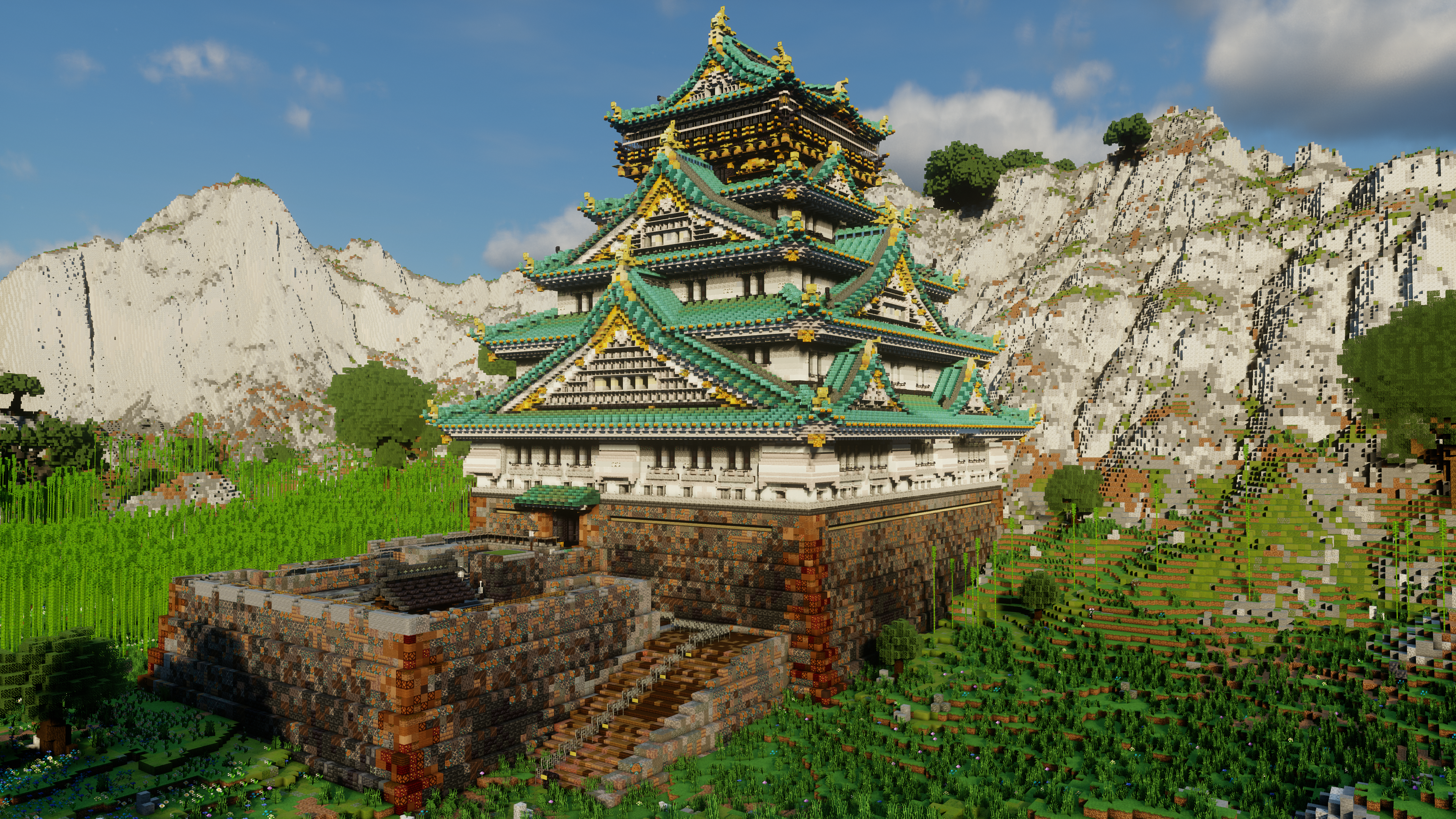
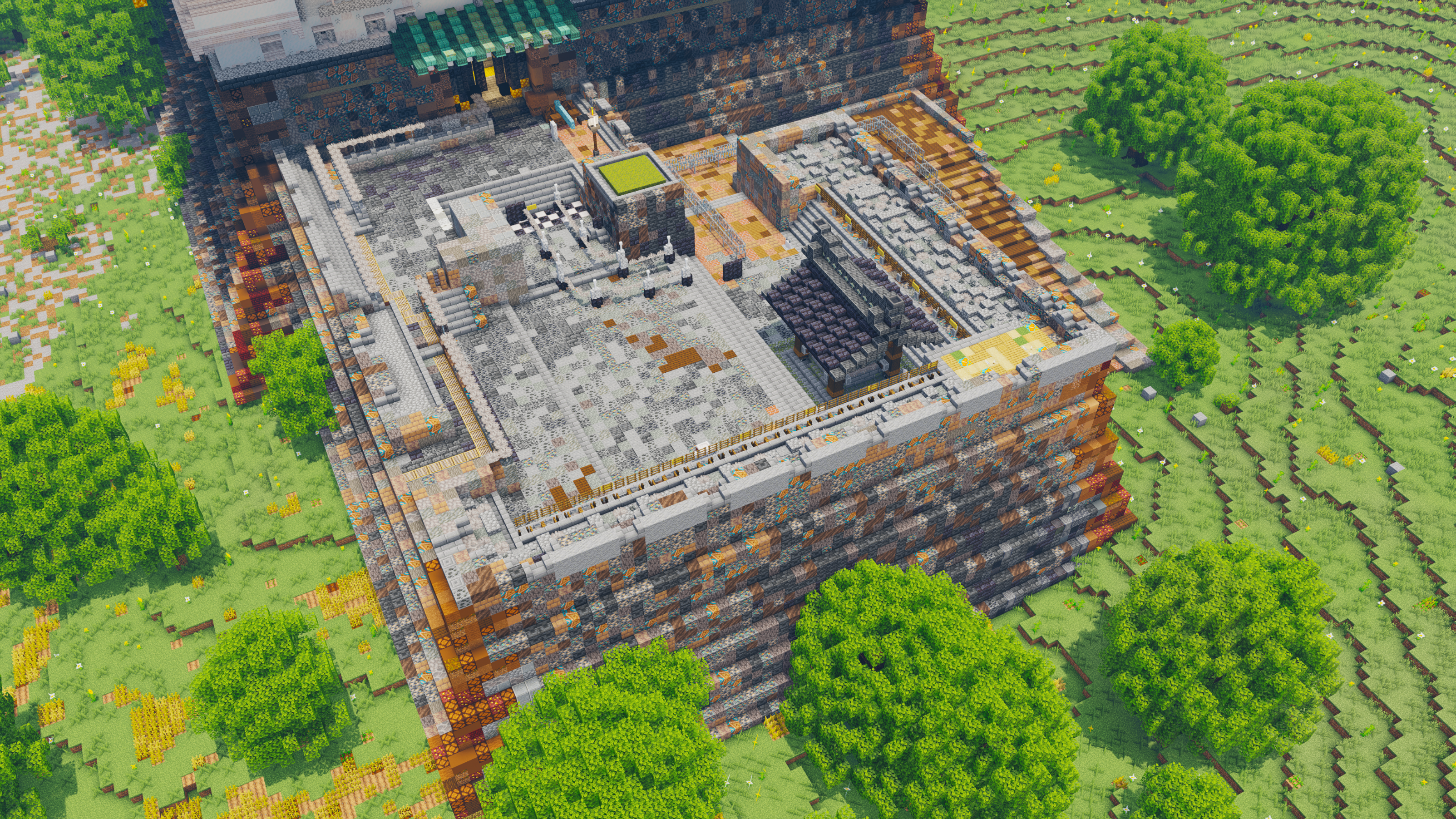
In this project, I recreated the current third Osaka Castle Main Tower, transforming it into a realistic Japanese-style Minecraft structure based on field research, historical sources, and photographic references.
GALLERY