KUMAMOTO CASTLE MAIN TOWER
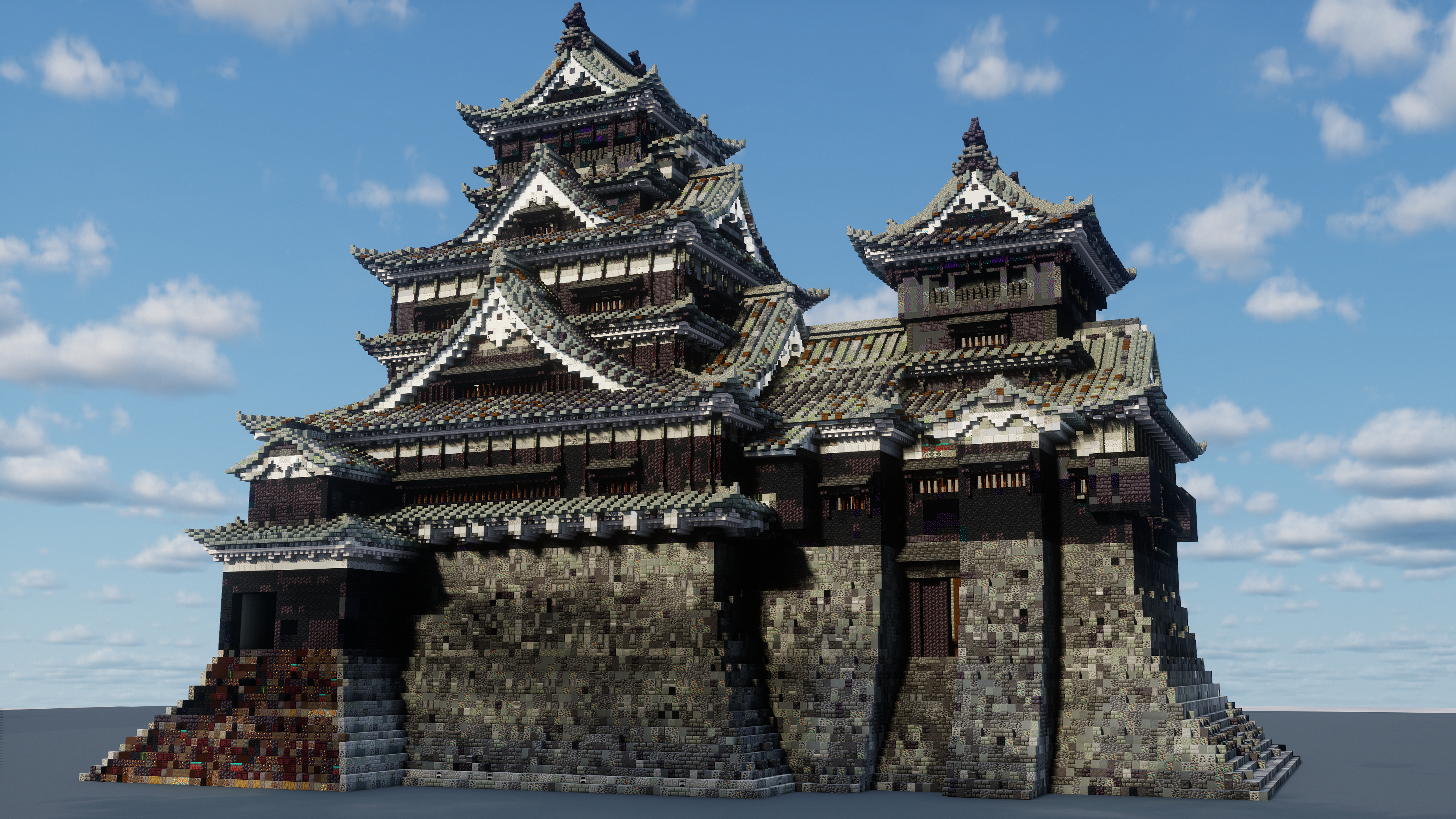
The great black castle of Kumamoto, also known as the Ginnan Castle.


OVERVIEW
Kumamoto Castle, a prominent early modern Japanese castle built in present-day Kumamoto City, Kumamoto Prefecture, is one of Japan's most renowned castles. It was constructed under the direction of Kato Kiyomasa, with construction beginning around 1601 during the Keicho era.
The castle developed into one of the largest castle complexes in western Japan, featuring vast baileys, imposing stone walls, and numerous towers and gates.
Its distinctive stone walls, known as Musha-gaeshi, curve outward at the base and become increasingly steep toward the top. Together with its imposing black main tower, they have become defining symbols of Kumamoto Castle, which is also counted among Japan's Three Great Castles.
HISTORY
Kumamoto Castle is an early modern Japanese castle built from the Azuchi-Momoyama period through the beginning of the Edo period. Construction was carried out under the direction of Kato Kiyomasa from around 1601, during the Keicho era. Kiyomasa was highly skilled in flood control and civil engineering, and Kumamoto Castle incorporated sophisticated defensive and practical engineering techniques.
One of its most distinctive features is the unique curved stone walls known as Musha-gaeshi, designed to prevent enemy forces from scaling the castle. The walls are relatively gentle at the bottom and become increasingly steep toward the top. This design was not merely aesthetically striking but also provided a high level of defensive capability, making it one of Kumamoto Castle's defining architectural characteristics.
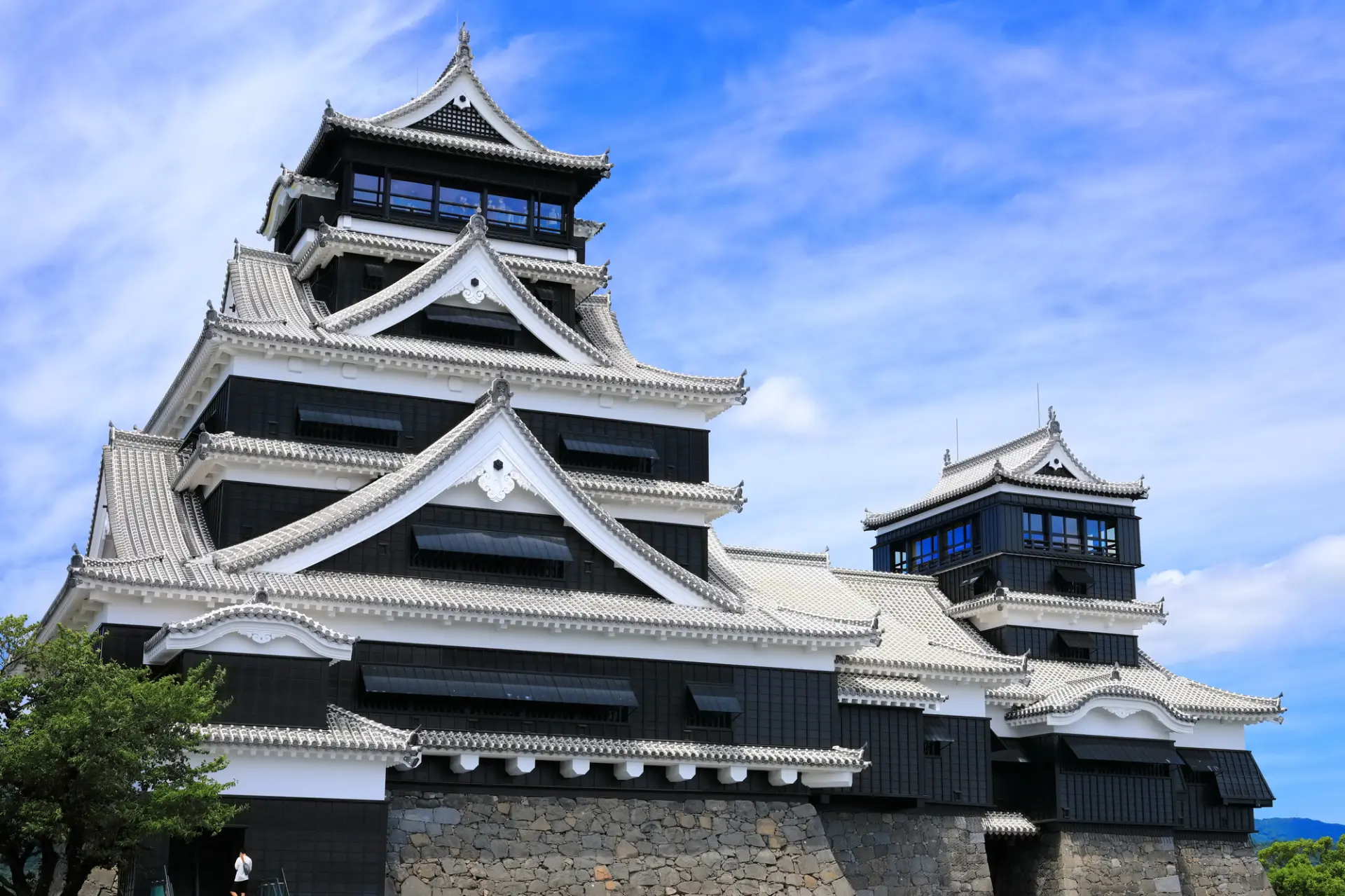
The original main tower complex consisted of a large main tower and a smaller main tower, forming a connected watchtower-style design. Its imposing appearance featured black lacquered weatherboards, white plaster walls, and substantial gable decorations, creating a dignified exterior characteristic of early modern Japanese castles.
From the Meiji period onward, Kumamoto Castle entered a major turning point in its history. During the Satsuma Rebellion of 1877, the castle became an important government military stronghold and the site of a prolonged siege. Many structures, including the main palace and castle towers, were destroyed by fire during this period. However, portions of the original castle, including its massive stone walls, towers, and gates, survived and continued to be preserved as an enduring symbol of Kumamoto.
In the modern era, efforts to preserve and restore Kumamoto Castle as a cultural property progressed. In 1960, the main tower was reconstructed using reinforced concrete. Today, together with restored structures and surviving important cultural properties, Kumamoto Castle remains one of Japan's most representative historic castle complexes and continues to attract visitors from around the world.
However, the Kumamoto Earthquake of April 2016 caused extensive damage to the castle. The main tower, stone walls, towers, and important cultural properties were among the structures severely affected. Approximately 20 percent of the castle's stone walls collapsed, causing significant damage to a castle complex with more than 400 years of history.
Following the earthquake, large-scale restoration work began, with Kumamoto Castle serving as a symbol of recovery. After seismic reinforcement and interior renovations, the main tower reopened for special public viewing in 2020. Restoration and preservation work continues today, particularly on the stone walls and groups of towers, with the aim of protecting the castle's cultural heritage for future generations.
Kumamoto Castle also continues to face the challenge of preparing for natural disasters. On July 28, 2026, a magnitude 7.1 earthquake occurred with its epicenter in the Kumamoto region of Kumamoto Prefecture. The event once again drew attention to the importance of disaster preparedness and preservation efforts to pass historic structures on to future generations.
With more than 400 years of history, Kumamoto Castle has endured warfare, modernization, and repeated natural disasters. It continues to be preserved and passed on to the future as one of the defining cultural landmarks of Kumamoto.
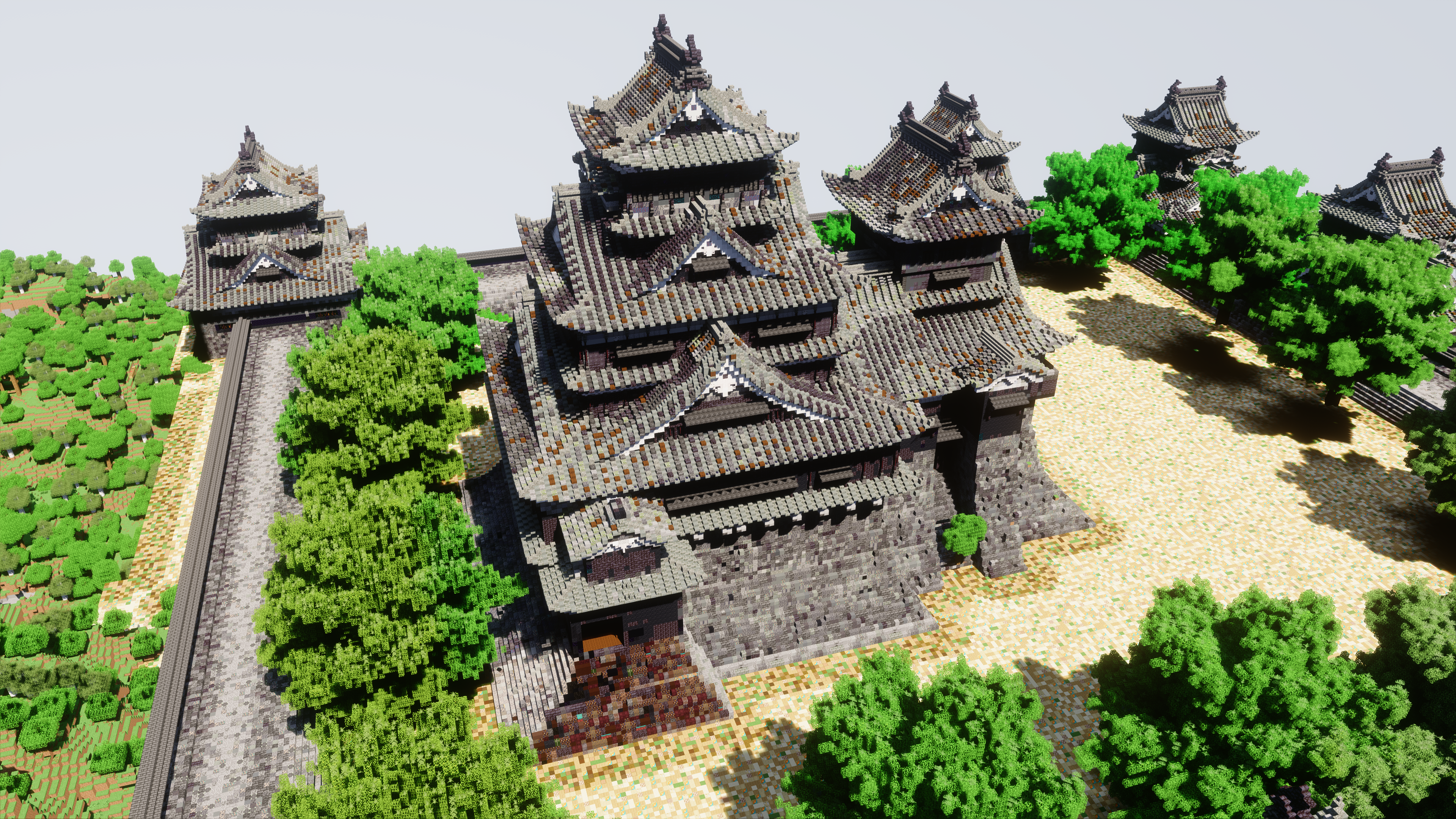
For this work, I recreated the Kumamoto Castle main tower as it appears following its restoration, using on-site photographs and historical and architectural references as the basis for a Japanese-style Minecraft build.
Rather than focusing solely on the main tower, I also considered the wider structure and landscape of Kumamoto Castle so that the project could eventually be expanded into a recreation of the entire castle complex, including the Honmaru Palace, Uto Tower, other towers, gates, and stone walls.
GALLERY